
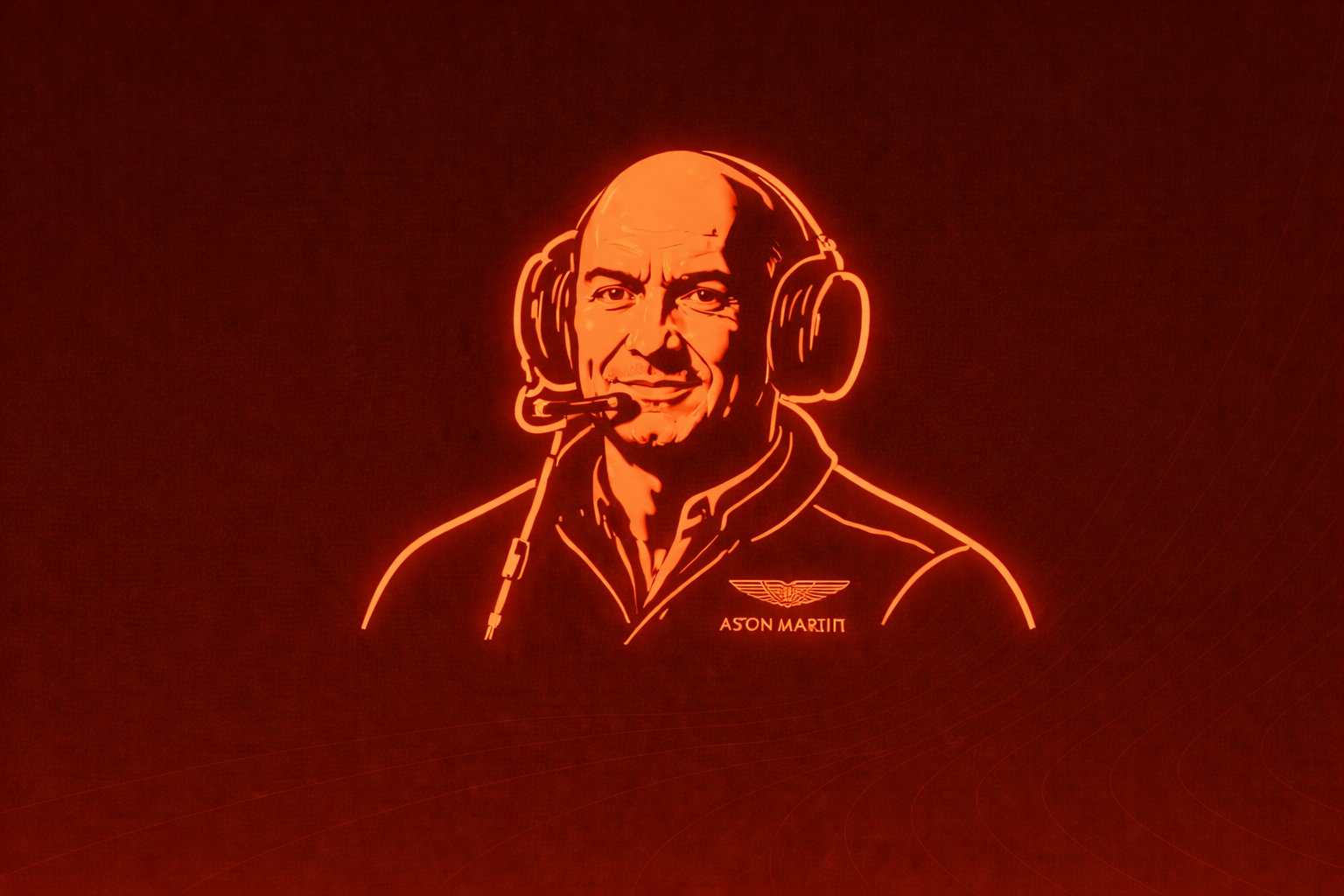
Aston Martin Leadership Change: the reset starts in the gaps
A leadership change in Formula 1 rarely starts with a press release. It starts in the gaps teams feel every Sunday night: the gap between what the wind tunnel promised and what the tyres delivered, between a clean long run and the messy reality of traffic, between a great update and a great process.
Aston Martin’s move for 2026 is a bet on closing those gaps with two specialists pointed at two different problems. Adrian Newey will become Aston Martin Team Principal from 2026, expanding his remit beyond pure design leadership. Andy Cowell shifts to Chief Strategy Officer, tasked with making the works-era integration (Honda power unit, plus the supporting technical partnerships) behave like one system rather than four separate projects.
On paper it’s a restructure. In reality it’s a statement: Aston Martin believe 2026 will reward teams that can turn engineering direction into repeatable lap time, quickly.
What actually changed (and when)
Newey becomes Aston Martin Team Principal from 2026
Aston Martin confirmed that Adrian Newey will take over as Team Principal at the start of 2026, as part of an expanded role that builds on his position as Managing Technical Partner.
Two details matter for performance analysis:
- It’s not only technical oversight. The role includes guiding the technical team and extending into trackside operations, tightening the feedback loop between factory decisions and weekend outcomes.
- The timing is deliberate. Newey began work with Aston Martin on March 1, 2025, and the team has positioned him to lead into the 2026 regulations reset with maximum authority.
Cowell moves to Chief Strategy Officer
Andy Cowell, who has been implementing structural changes as the team transitions toward being a full works operation, becomes Chief Strategy Officer, focusing on optimising the technical partnership between Aston Martin, Honda, Aramco and Valvoline, and ensuring integration across power unit, fuel and chassis.
If Newey is being handed the steering wheel, Cowell is being handed the map.
Why this is more than a title swap
Aston Martin aren’t just changing who sits on the pit wall. They’re changing where decisions land.
The real performance lever: decision latency
In modern F1, the biggest enemy isn’t a slow concept. It’s a slow response.
A typical performance spiral looks like this:
- The car has a weakness (say, rear instability in medium-speed).
- The team debates whether it’s aero balance, mechanical platform, tyre prep, or correlation error.
- Updates arrive late, or arrive targeted at the wrong cause.
By giving Newey the Team Principal role, Aston are trying to reduce the time between:
- identifying the cause in data
- deciding the fix
- manufacturing the fix
- deploying the fix
That chain is where championships are either won or left on the table.
Trackside authority matters when the car is new
2026 won’t just be “new parts.” It’s new behaviour: new regulation limits, new aero sensitivities, and new power unit characteristics that will shift energy deployment and drivability.
When the car surprises you, the teams that recover fastest are the ones where engineering direction is unambiguous. Newey’s appointment suggests Aston want that direction to be single-threaded.
For the bigger picture on what 2026 is changing, pair this with our breakdown: 2026 Regulations Explained: Lighter Cars & Active Aero.
The data context: where Aston Martin actually are right now
Leadership changes always sound ambitious. The standings tell you how steep the climb is.
2025 Constructors’ Championship: midfield margins, front-running reality
Aston Martin closed 2025 7th in the Constructors’ Championship with 90 points, in the tight midfield where one strong weekend can flip two positions.
The problem is the scale of the front gap:
- McLaren: 833 points
- Mercedes: 469
- Red Bull: 451
- Ferrari: 398
- Aston Martin: 90
Even if you adjust for “normal” season volatility, that’s not a setup tweak away. It’s a system upgrade.
2025 Drivers’ points: Alonso carried the bulk
Driver points reinforce the story:
- Fernando Alonso: 56 points
- Lance Stroll: 34 points
This distribution matters because it hints at two things teams model internally:
- Ceiling: is the car occasionally capable of big points?
- Repeatability: can both drivers access the car’s performance window often enough?
If the car’s peak is hard to access, you end up with “hero laps” and inconsistent Sundays. That’s exactly the sort of gap a Newey-led technical direction is designed to shrink.
The championship standard just moved again
2025 ended with Lando Norris taking the Drivers’ title (423) over Max Verstappen (421), with Oscar Piastri third (410).
That matters for Aston Martin because the grid’s competitive baseline is now set by teams that win through:
- tyre management windows
- pit stop execution
- clean race modelling
- upgrade consistency
Aston’s 2026 plan isn’t just to be faster. It’s to be less wrong on more weekends.
Cowell’s brief: make a works partnership behave like one car
Aston Martin’s 2026 story is inseparable from integration.
Integration is lap time (not a corporate diagram)
When a team becomes a works operation, it doesn’t automatically gain performance. It gains responsibility.
The question Cowell is being assigned is brutally practical:
- Can the chassis, power unit, cooling, fuel, and lubricants converge into one coherent concept?
If not, you get classic works-era failure modes:
- packaging compromises that force conservative aero shapes
- cooling drag that won’t go away
- drivability limitations that hurt tyre life
- correlation errors because the “car” in simulation isn’t the car on track
Cowell’s CSO focus on integration across Honda, Aramco and Valvoline is a clue that Aston see this as a performance-critical constraint, not a background partnership slide.
Newey’s brief: own the lap-time narrative from factory to pit wall
Why Newey-as-Team-Principal is unusual
Newey is synonymous with car concepts, aero maps, and philosophy shifts. Team Principal is a different job: it’s part leadership, part prioritisation, part forcing trade-offs when there’s no perfect answer.
But in a regulation reset, those trade-offs are exactly where time is found.
A few areas where Newey’s influence could be decisive:
- Early concept commitment: 2026 rewards teams that choose a direction early and iterate hard.
- Platform control: if the car’s ride and balance are stable, the aero gets to do its job.
- Update logic: fewer parts, better targeted, faster correlation.
Newey’s expanded mandate that includes trackside operations hints at a tighter loop: track feedback informing design, and design intent shaping weekend decisions.
Scoring matters: no fastest lap point from 2025 onwards
RaceMate users will feel this immediately in simulations.
From 2025 onward, F1 removed the bonus point for fastest lap, meaning the points economy is slightly less “spiky” and marginal strategies around late pit stops for soft tyres lose their reward.
That change matters when you’re modelling:
- midfield teams chasing P10
- late-race risk profiles
- season-long points forecasts where one extra point used to swing tight battles
If you want to run your own 2026 scenarios (driver lineups, DNFs, sprint weekends), use our championship calculator: RaceMate points simulator.
Circuits and calendar context: why 2025’s flow still matters for 2026 planning
Even as 2026 reshuffles performance, the calendar rhythm keeps shaping development choices.
2025 ran as a 24-race season starting in Melbourne and ending in Abu Dhabi, with sprint weekends including Shanghai, Miami, Spa, Austin, São Paulo and Qatar.
For Aston Martin, the operational lesson is clear:
- The early flyaways test cooling and reliability.
- The European run is where upgrade cadence wins positions.
- The late-season triple-header-style intensity punishes weak processes.
A Team Principal who can keep the organisation aligned through those phases is a performance tool, not a PR role.
(If you’re tracking the winter timeline, our planning guide is here: Pre‑Season Testing 2026: Dates & What to Watch.)
What to watch in 2026: three performance signals that will show if it’s working
Aston Martin don’t need to “look busy” in 2026. They need measurable signals.
1) Qualifying conversion rate
If the concept is healthier, you’ll see fewer weekends where the car is quick in practice but can’t land the lap in Q2/Q3 due to narrow prep windows.
2) Two-driver scoring frequency
The fastest way out of the midfield is not one big day, it’s both cars in points more often. In 2025, Aston’s 90 points were already within touching distance of Racing Bulls (92), so consistency is a realistic early win condition.
3) Upgrade correlation (especially after the first major package)
The first major update in a new regs era is where teams discover whether the tunnel and CFD are telling the truth. If Aston can add performance without adding volatility, the restructure is paying off.
Conclusion: Aston Martin are trying to win the 2026 season before it starts
This isn’t about putting a famous name on a team principal badge.
It’s about choosing where Aston Martin want to fight:
- Newey is being positioned to own the lap-time story, end-to-end.
- Cowell is being positioned to own the integration story, so the works-era car behaves like one coherent machine.
And the timing is ruthless: the grid is coming off a season where the top end delivered championship-level execution across 24 races, and the midfield was decided by margins measured in single-digit points.
In 2026, the winners won’t just have the best idea. They’ll have the shortest distance between idea and lap time.
That distance is the gap Aston Martin are finally restructuring to close.