⌘+K
Drivers Features Blog Simulator Contact

F1 News, Guides & Analysis

Data-first coverage of the 2025 season.

Your go-to source for Formula 1 insights, race analysis, and championship updates.

Welcome to the Race Mate Blog — your go-to source for Formula 1 insights. From real-time driver standings to in-depth analysis of the Constructors' Championship, we cover every angle of the F1 season. Explore our race previews, post-race breakdowns, and comprehensive guides including our F1 Points System Explained and F1 Constructors' Championship Explained. Whether you're tracking Formula 1 standings, understanding race analysis, or diving deep into team strategies, our expert content keeps you informed throughout the championship battle.

Latest Posts

The Overcut Explained: Why Staying Out Sometimes Wins
Race Analysis

The Overcut Explained: Why Staying Out Sometimes Wins

There’s a special kind of panic you can feel through the timing tower: your driver is leading (or finally in clean air), the car behind dives into the pits, and everyone on the pit wall suddenly has to decide whether they’re about to get undercut… or whether that pit stop is actually the start of a slow-motion self-own. Because the overcut isn’t the glamorous strategy — it’s the one that looks like indecision until it cashes out — but in modern Formula 1, staying out can be the faster move precisely because the lap immediately after a stop is often a performance dip disguised as “fresh tyres.” And in a points era where every position is pure value (and with no fastest lap bonus from 2025 onwards), converting one clean-air lap into one extra place can be the difference between a title and a “what if.”

F1 strategyovercutpit stop strategytyre managementrace analysis
Read More →
The Undercut Myth: When It’s a Trap
Race Analysis

The Undercut Myth: When It’s a Trap

The undercut is Formula 1’s favorite bedtime story: pit first, go faster, jump them at the stop. It’s tidy, it’s intuitive, and it’s often wrong in exactly the way that hurts most — it makes you feel proactive while quietly donating seconds to physics, traffic, and tyre behavior you didn’t pay for. In a points era where every position compounds (and with no fastest lap bonus point from 2025 onwards), the undercut isn’t a default weapon — it’s a conditional trade that can backfire harder than an optimistic radio call.

F1 strategyundercutpit stop strategytyre warm-uptyre degradation
Read More →
Pole Position Value: Which Circuits Make It a Cheat Code
Race Analysis

Pole Position Value: Which Circuits Make It a Cheat Code

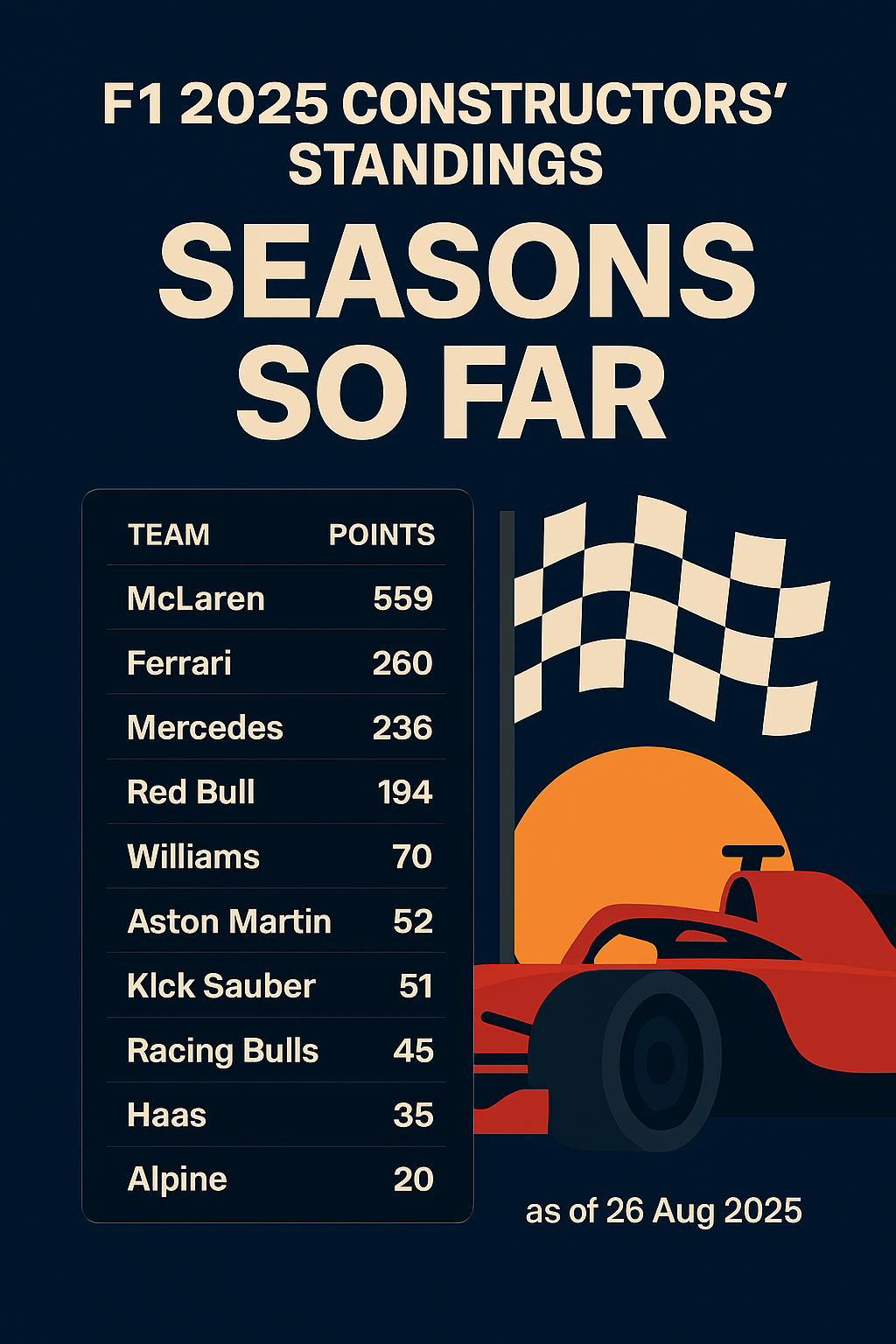
Pole position isn’t just a starting spot — it’s a contract with the race. At some circuits, pole buys you clean air, tyre life, strategy freedom, and the right to dictate pace; at others, it buys you a short-lived photo op before the slipstream and DRS turn Turn 1 into a drafting lottery. The difference matters more in tight championship years, and 2025 was exactly that: Lando Norris won the Drivers’ title 423–421 over Max Verstappen, while McLaren took the Constructors’ crown with 833 points — margins small enough that a single grid row could feel like a season.

F1 qualifying analysispole positionF1 circuit characteristicsrace strategychampionship analysis
Read More →
How to Watch a Car: 7 Visual Cues That Reveal Its Strengths
Race Analysis

How to Watch a Car: 7 Visual Cues That Reveal Its Strengths

The fastest way to understand an F1 season isn’t to memorize lap charts—it’s to learn the body language of a car. Watch enough onboards and you start seeing the same story told in different accents: a nose that bites early, a rear that refuses to settle, a chassis that floats over kerbs like they’re painted on, or a car that looks calm until the tyres quietly fall off a cliff. That skill mattered more than ever in 2025, when the Drivers’ title was settled by two points (Lando Norris 423 vs Max Verstappen 421) and McLaren walked away with the Constructors’ crown on 833 points—because once the margins get that thin, you can’t afford to misread what you’re looking at

F1 onboard analysisF1 car balancetyre degradationracecraft and drivingchampionship analysis
Read More →
Setup Tradeoffs: The Classic “Fast But Eats Tyres” Problem
Race Analysis

Setup Tradeoffs: The Classic “Fast But Eats Tyres” Problem

Lap time doesn’t just come from speed — it comes from where you spend grip, and how aggressively you’re willing to spend it early to cash out a position before the tyre bill arrives. That’s why the “fast but eats tyres” setup never dies in Formula 1: it’s a deliberate choice to convert peak performance into track position, knowing the race will later demand interest payments in degradation, temperature, and driver workload. In 2025, with Lando Norris taking the title by two points (423–421 over Max Verstappen) and McLaren topping the Constructors’ table on 833 points, the margins were so thin that “slightly worse tyres” wasn’t an abstract concept — it was literally the difference between champion and runner-up.

F1 setuptyre degradationrace strategycar balancechampionship analysis
Read More →
Braking: The Most Underappreciated Performance Area
Race Analysis

Braking: The Most Underappreciated Performance Area

There’s a kind of lap time that never looks dramatic on TV because it doesn’t announce itself with sparks or a late lunge; it just quietly doesn’t appear if you miss it. Braking is where that time lives: the invisible tax paid in entry speed you didn’t carry, rotation you didn’t create, tyre temperature you didn’t build, and confidence you didn’t earn. The data obsession in modern F1 has made us fluent in downforce levels and stint models, but the truth is simpler and harsher — the car that can brake later and stop cleaner doesn’t just win corners, it wins decisions.

F1 brakingtrail brakingbrake-by-wiretyre temperature2026 F1 season
Read More →
Race Starts Under the Microscope
Race Analysis

Race Starts Under the Microscope

The start is Formula 1’s most honest moment: 20 cars, one strip of asphalt, and a stopwatch that doesn’t care how good your long-run pace looked on Friday. Before tyre degradation, before DRS, before the pit wall gets to hide behind “model variance,” you get a raw test of execution under compression — clutch bite, torque delivery, wheelspin management, and a Turn 1 decision made with half the information you’ll wish you had. In 2025, a season decided by margins so small they felt personal, that first 200 metres wasn’t theatre; it was championship accounting.

F1 race startslaunch phaseTurn 1 analysisLap 1 positioningF1 2025 season
Read More →
Teammate Gaps 2025: Where Constructors Won/Lost Points
Race Analysis

Teammate Gaps 2025: Where Constructors Won/Lost Points

There’s a seductive lie hiding inside every Constructors’ Championship table: that a team’s points total is a single story. It isn’t. It’s two parallel seasons forced to share one garage—two qualifying ceilings, two tyre lives, two traffic realities, two decision chains on the pit wall—and then one number at the end that pretends all of that complexity averaged out cleanly. In 2025, it didn’t. The year McLaren won big and Norris won tight wasn’t decided only by raw pace; it was decided by how often each team got both cars into the points-paying part of the weekend, and how brutally a “normal” teammate gap turns into a points sink once DNFs, DSQs, and sprint swings get layered on top.

F1 2025teammate gapsqualifying head-to-headconstructors championshipchampionship analysis
Read More →
The Hidden Cost of Traffic: The Lap Time You Never Get Back
Race Analysis

The Hidden Cost of Traffic: The Lap Time You Never Get Back

There’s a particular kind of frustration in F1 that doesn’t show up in the lap chart the way a bad stop does. It’s quieter than a cross-threaded wheel nut and less obvious than a botched Safety Car call: the moment a driver exits the pit lane on fresh tyres and instantly has to drive someone else’s race. The tyre choice can be correct. The pit lap can be correct. The model can be correct. And the strategy still collapses, not because the team misread degradation — but because they mispriced traffic.

F1 strategytraffic and dirty airundercut overcutrace pace analysischampionship insights
Read More →