
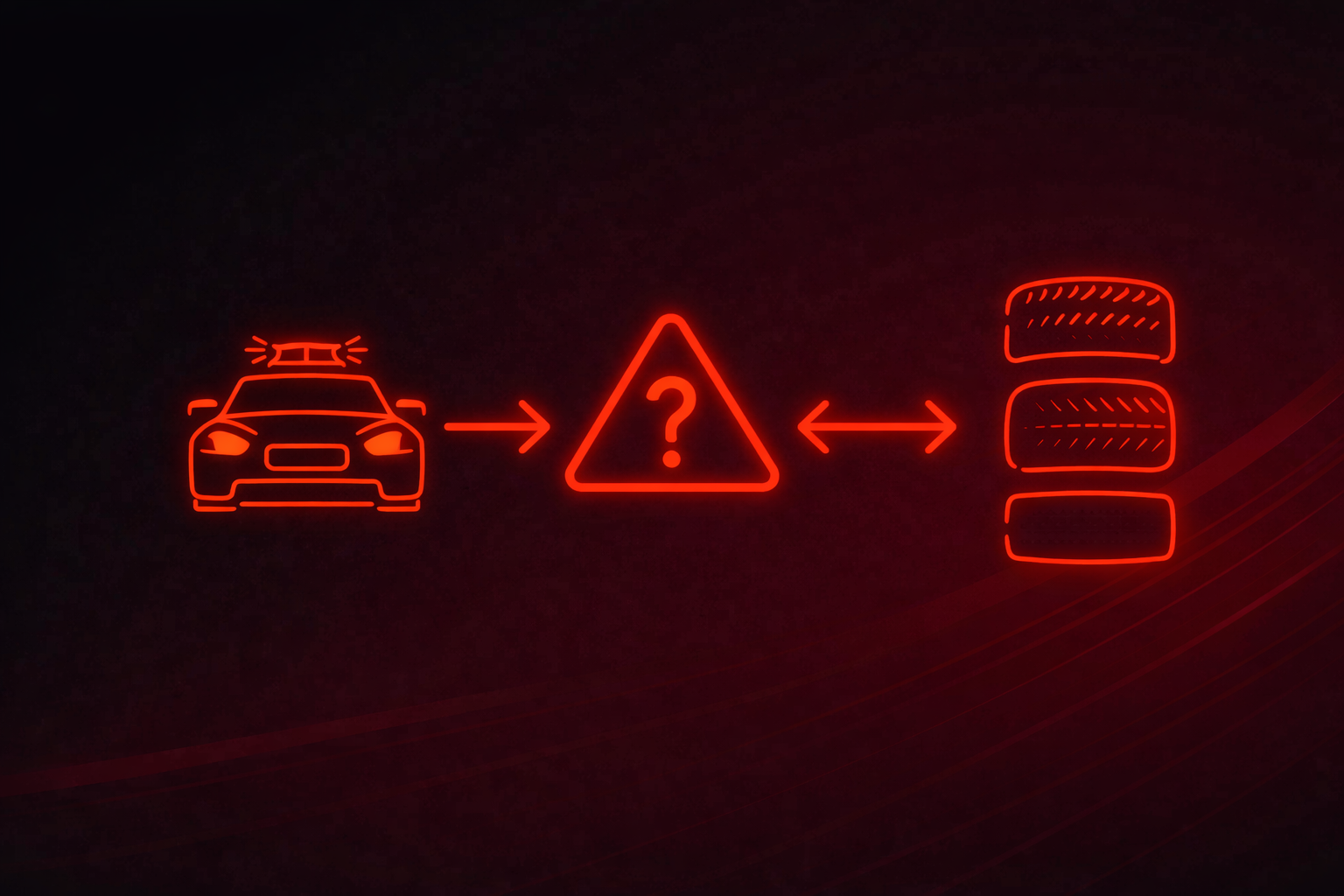
The Safety Car doesn’t just slow a race down — it compresses it into a single, brutal question asked at 300 km/h: do we buy new tyres, or do we buy track position? On the pit wall it rarely looks like chess. It looks like five seconds of people talking over each other while the driver asks a question you can’t fully answer: “Box?” Because by the time you’ve said “stand by,” half the grid has already committed.
In a points era where every position compounds (and with no fastest lap bonus point from 2025 onwards), Safety Car calls aren’t “nice-to-haves.” They’re championship leverage. The 2025 Drivers’ title was decided by two points — Lando Norris 423 to Max Verstappen 421 — and those two points can be the difference between pitting into traffic and restarting on the wrong tyre.
Why Safety Car strategy is its own game
Under green-flag conditions, a pit stop is mostly an accounting exercise: you pay the full pit lane time loss (the “pit delta”), then you try to earn it back with tyre performance and clean air. Under a Safety Car, the market shifts. The pack is circulating slowly, which means the effective delta for stopping can drop dramatically — but the cost isn’t just time anymore. It’s position at the restart, exposure to DRS trains, risk of being double-stacked, and the probability you’ll need to stop again anyway.
A good Safety Car decision is less “what’s fastest in isolation?” and more “what’s the best race state to own for the next 20 laps?” That’s why you’ll see teams keep a driver out on used mediums even when a “free stop” is on offer: they’re not ignoring lap time; they’re buying control.
The 5-second decision: the framework teams actually use
When the Safety Car is deployed, teams run a simplified decision tree. The math is real, but the structure is deliberately blunt, because the inputs are noisy and the time window is tiny.
Step 1: Identify the Safety Car type (SC vs VSC) and the “delta opportunity”
First: is it a full Safety Car or a Virtual Safety Car? A VSC can create a pit advantage, but it’s more sensitive to where you are on track when it’s called. A full SC is cruder: the whole field is slowed and bunched, and the pit delta reduction is usually more universally available.
The key output here isn’t “how many seconds do we save?” It’s: does pitting keep us in the same race? If stopping drops you behind a slower car (or into a DRS train you can’t escape), the saved seconds can become irrelevant.
Step 2: Convert the choice into one question: “What position do we restart in?”
This is the anchor. Teams will take the projected pit exit and translate it into a restart position and neighborhood: who are you behind, and who are you ahead of?
Because under Safety Car, raw pace is often capped by traffic. If you restart P9 behind a defensive car on the same tyre, you can be “faster” and still go nowhere for 15 laps. Meanwhile the driver who stayed out might be slower on paper, but restarts P3 with clean air and dictates the first stint of the restart.
Track position is not a principle. It’s a context. It matters most when overtaking is expensive.
Step 3: Score the tyre state (not just the compound)
Teams don’t choose between “soft vs medium.” They choose between tyre states:
- New tyre vs used tyre (how used matters — 5 laps old is not 25)
- Warm-up behavior (can you switch the tyre on at the restart?)
- Deg profile (will you pay for it later?)
This is where Safety Car decisions quietly mirror undercut/overcut logic — except the “lap time swing” is compressed into a restart phase. If you want the broader strategic foundation, it pairs well with The Undercut Myth: When It’s a Trap and The Overcut Explained: Why Staying Out Sometimes Wins.
Step 4: Map the restart physics: DRS timing, grip evolution, and risk tolerance
A Safety Car restart isn’t a neutral “lap 1 again.” It’s a specific mechanical moment:
- Tyre temperature can be the whole overtake window (or the whole defense window).
- DRS activation timing changes how much a single position is worth. If DRS comes quickly, being P4 behind a faster car might be worse than being P6 with a tyre offset.
- Grip evolution (rubbering in) can reward the driver with clean air, because they control pace and line.
This is why some teams will sacrifice a position to get a tyre advantage that can be converted in the first DRS-enabled lap — and why other teams will do the opposite when overtaking is structurally limited.
Step 5: Account for operational constraints (the part fans forget)
Two variables matter that don’t show up on TV:
- Double-stack risk: If both cars pit, the second car can lose time waiting, turning a “cheap stop” into a normal one.
- Pit box location and release: Under SC, pit lanes get crowded and marginal release delays become position losses.
This is also where teams split strategies: one car covers track position, the other covers tyre advantage, because hedging is sometimes the optimal play when the race state is uncertain.
Circuit context: where “stay out” is secretly the default
Safety Car strategy is circuit-dependent because the value of track position changes with track geometry. The 2026 calendar again mixes high-degradation, high-overtake venues with street circuits where passing is a negotiation.
High track-position value circuits
These are circuits where overtaking is limited, or where the “cost” of being in a train is enormous. If you pit and rejoin in traffic, your new tyres can be neutralized.
Typical characteristics:
- Short straights or awkward DRS zones
- Narrow racing line / street circuit constraint
- High probability that the top 5 can manage pace and still defend
At these tracks, teams often treat a Safety Car as a position auction: whoever stays out keeps control, and the tyre advantage needs to be big to justify giving that up.
High tyre-value circuits
These are circuits where tyre offsets reliably convert into overtakes — either because the track is wide, the DRS zones are strong, or degradation creates natural performance gaps.
Typical characteristics:
- Multiple overtaking zones
- High degradation (or high thermal sensitivity)
- A meaningful lap-time delta between compounds
Here, “take the cheap stop” is more often correct, because the tyre advantage is more liquid: it can be cashed into moves.
Championship math: why Safety Car calls feel bigger in 2026
Safety Car decisions get sharper when championships are tight, because the points gradient is steep at the front and the midfield is compressed. In 2025, Norris (423) and Verstappen (421) finished separated by two points. That’s not a “one bad race” gap — that’s a “one Safety Car, one wrong tire, one lost place” gap.
And the constructors’ side is just as unforgiving. McLaren finished 2025 as champions on 833 points, ahead of Mercedes on 469 and Red Bull on 451. Those totals aren’t just trivia; they explain why teams will sometimes make what looks like an overreaction to a Safety Car for P8 vs P10. In a season of compounding results, those small deltas add up — especially now that there’s no fastest lap bonus point to occasionally “patch” a bad day.
If you want to stress-test how a single Safety Car swing changes the table, run the scenario in our championship calculator: RaceMate Simulator.
The “Pit or stay out?” quick checklist (RaceMate version)
If you strip the radio chaos away, most calls reduce to a weighted checklist. Teams won’t admit it’s this simple — but in the moment, it effectively is.
Pit is favored when…
- You don’t lose critical restart position (you stay in clean air or at least in a passable group)
- The tyre offset is convertible at this circuit (overtaking isn’t structurally blocked)
- You were going to stop anyway (the SC aligns with your pit window)
- Your current tyres are near a performance cliff (degradation, graining, overheating)
- You can execute without an operational penalty (no costly double-stack)
Staying out is favored when…
- Restarting ahead is worth more than tyre performance (track position circuit)
- Pitting drops you into a train you can’t escape
- You have a strategic reason to control pace (protecting a teammate, managing gaps, defending a podium)
- The new tyre would be hard to switch on (warm-up risk) or would force an extra stop later
This is also where qualifying context bleeds into strategy context: if you’re at a circuit where pole position behaves like a “cheat code,” it’s because track position is sticky — and that stickiness gets magnified on Safety Car restarts. (Pole Position Value: Which Circuits Make It a Cheat Code)
2026 context: more teams, more variance, more Safety Car leverage
The grid is changing. 2026 brings 11 teams including Cadillac, and the confirmed driver market reshuffle adds more variability — which tends to create more incidents, more mixed strategies, and more restarts where tyre state matters more than ever. A larger, less “settled” competitive order also increases the value of getting the Safety Car call right, because there are more plausible cars to get stuck behind — and more plausible cars that can attack you if you’ve chosen the wrong tyre.
And the calendar itself is a marathon again: the 2026 season begins in Australia (March 6–8) and runs through Abu Dhabi (December 4–6). Over that many rounds, Safety Car decisions don’t just decide races; they decide whether you’re the team that consistently converts chaos into points.
Conclusion: the real decision isn’t “tyres vs track position” — it’s “which problem do you prefer?”
A Safety Car is a forced-choice moment, and the trap is thinking there’s a universally “aggressive” or “conservative” answer. Pitting is aggressive if it buys you a tyre weapon you can actually use; it’s conservative if it’s just following the herd. Staying out is conservative if it’s fear; it’s aggressive if you’re deliberately betting that track position will lock the order.
The best teams don’t guess. They classify the circuit, project the restart neighborhood, price the tyre state, and then choose the race state they want to own — all in the time it takes for the onboard to cut from green flags to the Safety Car boards. And if you’re watching at home, that’s the real tell: when the leaders hesitate, it’s not because they don’t know what’s happening. It’s because they know exactly how expensive the wrong five-second decision can be.